
About the Johnston County Clerk's Office
Michelle Ball serves as the Johnston County Clerk of Superior Court, with a term expiring in 2026. Clerks of superior court are elected in all 100 North Carolina counties. Each one serves a four-year term. The office sits inside the Johnston County Courthouse in downtown Smithfield. This is the office to call when you need a court file, a certified copy, or help finding the right court division for a case.
The clerk runs all the clerical and record-keeping work for both the Superior Court and the District Court. The office keeps case files according to rules set by the North Carolina Administrative Office of the Courts. It also collects money due to the State or to parties in a case. In short, the clerk is the records custodian for court matters filed in Johnston County, and the source for official copies of those records.
Johnston County Clerk of Superior Court
Clerk: Michelle Ball
Johnston County Courthouse
207 E Johnston St (PO Box 297)
Smithfield, NC 27577
(919) 209-5400
Monday-Friday, 8:00 AM-5:00 PM
What the Johnston County Clerk Does
The clerk wears more than one hat. The office files and keeps records for civil, criminal, family, estate, and special proceeding cases. It issues court process, takes in fees, and pays out money owed to the State or to parties. The clerk also acts as a judicial officer in some matters, not just a record keeper. That dual role is unusual and worth understanding before you call.
Here are the main duties the office handles for Johnston County:
- Keeps all clerical and record-keeping functions for the Superior Court and District Court.
- Serves as judge of probate, handling wills, estates, guardianships, and trusts.
- Hears special proceedings such as adoptions, guardianship determinations, and land partitions.
- Collects money due to the State or to parties, and keeps the books for it.
- In criminal matters, issues arrest and search warrants and conducts initial appearance hearings.
The Judicial Branch describes these duties on its court-officials page. The clerk's office groups Civil, Criminal, Domestic, Estates, and Special Proceedings staff under one main phone line. When you call (919) 209-5400, ask for the division that matches your case so the right clerk can pull the file.
How to Request a Certified Copy
A certified copy is a court-stamped copy that proves a document is a true match to the official file. You need one for things like proving a divorce, settling an estate, or filing with another agency. A printout from the online portal is not certified and may not be accepted in court. Certified copies of Johnston County court records come from the clerk, not from the state court office or the portal.
- Find the case number. North Carolina case numbers have a year, case-type letters, a sequence, and a county code. You can look this up first on the eCourts Portal.
- Decide which documents you need and how many copies. Note the division, such as civil, criminal, or estates.
- Contact the clerk at (919) 209-5400 or visit the courthouse to ask for the copy and the current fee.
- Pay by an accepted method. By mail, send a money order or certified check; in person, you may use cash, card, money order, or certified check. Personal checks are not accepted.
- Pick the copy up at the counter, or wait for it to arrive by mail. Keep your case number handy for any follow-up.
The clerk can also run a certified name-based criminal record search for a single county. That request uses Form AOC-CR-314 and carries a set fee, covered in the fee section below.
Records Request Form Fields
For court case files, the request is usually handled at the clerk's counter or by phone, and the clerk pulls the file by case number or party name. A separate form exists for state-level administrative records. The North Carolina Administrative Office of the Courts (NCAOC) public-record request form asks for contact details and a clear description of the records you want. That form is for existing NCAOC administrative records only, not for local court files. The table lists the fields on that form.
| Field | Required | Notes |
|---|---|---|
| Name of Requesting Individual | Yes | Section A of the NCAOC form. |
| Title within Firm or Organization | No | Optional if you represent a firm. |
| Phone Number | Yes | For follow-up on the request. |
| Email Address | Yes | Used to send records or replies. |
| Mailing Street Address 1 | Yes | Primary mailing line. |
| Mailing Street Address 2 | No | Suite, unit, or apartment. |
| City | Yes | Mailing city. |
| State | Yes | U.S. state dropdown. |
| ZIP Code | Yes | Mailing ZIP. |
| Records Requested | Yes | Section B; describe the records clearly. |
Note: The NCAOC form is not for local court case files, case information, vital certificates, or background searches; those go to the clerk.
Johnston County Clerk Records Fees
Fees depend on what you ask for. Looking at a court file in the office is free of charge. A certified copy or a formal record search costs money. The most common set fee is the certified single-county criminal record search, which runs $25 and uses Form AOC-CR-314. State court office copies run a quarter per page under the published policy. The table lists the common charges from official sources.
| Item | Amount |
|---|---|
| Certified single-county criminal record search (Form AOC-CR-314) | $25.00 |
| NCAOC administrative copy, per page | $0.25 |
| Record inspection in the clerk's office | No charge |
| Certified court copy | Per page; ask the clerk for the current rate |
North Carolina's copy-fee rule sits in the state's public-records law. It limits ordinary uncertified-copy charges to actual cost and allows a special service charge for very large or labor-heavy requests.
You can read the rule on the G.S. 132-6.2 statute page, which sets copy fees and special service charges.
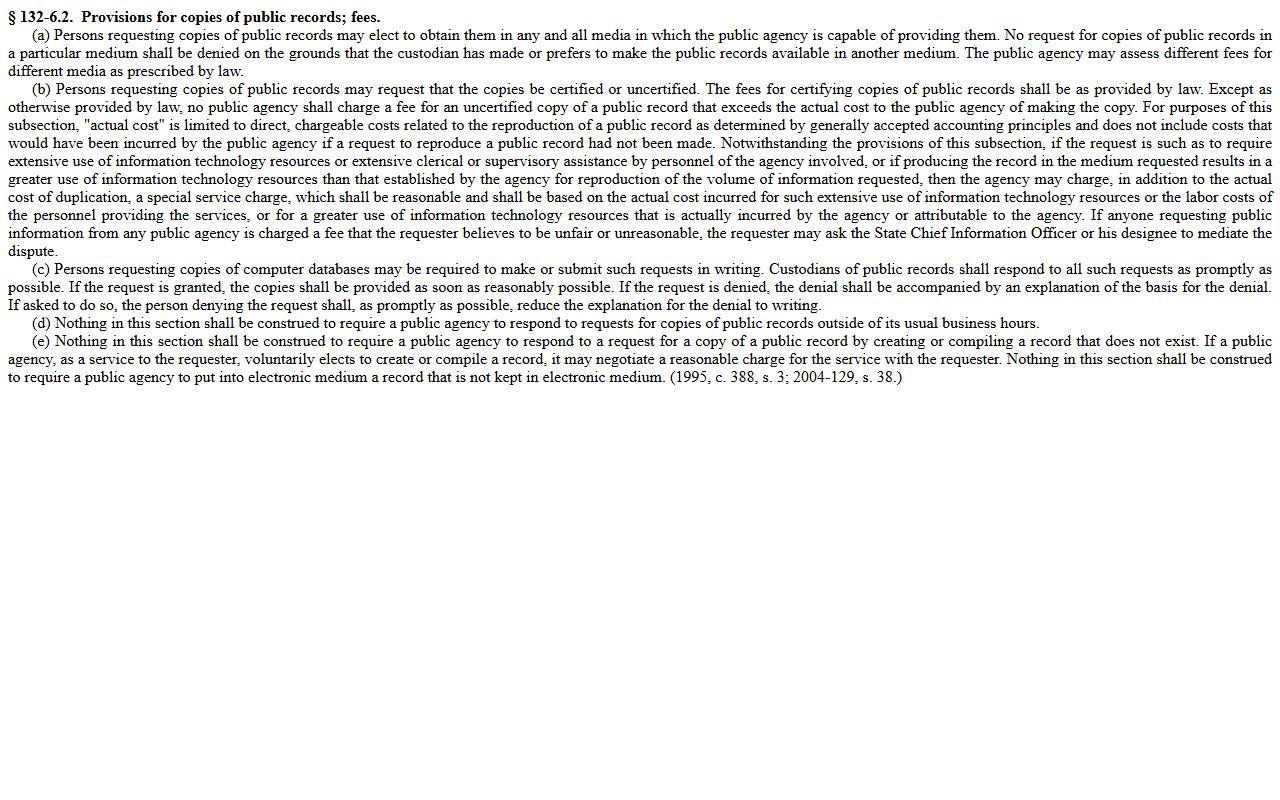
That statute is why the office charges actual cost for plain copies and can add a service charge when a request takes heavy staff time. For payments, mail must be a money order or certified check payable to the Johnston County Clerk of Superior Court, sent to PO Box 297. In person, the office takes cash, credit or debit cards with processing fees, money orders, and certified checks. No personal checks.
Criminal Record Searches Through the Clerk
The clerk runs official, certified criminal record searches for cases filed in Johnston County. This is a name-based search of one county's court index. It is different from a multi-state background check sold by private sites. To order one, file Form AOC-CR-314 with the clerk and pay the $25 fee. By mail, the office accepts a money order or certified check. In person, you may pay with a card, cash, money order, or certified check.
Statewide court indexes also support these searches behind the scenes. The judgment and case indexes that power the portal rest on a North Carolina statute about records of judgments. The clerk maintains the local index that feeds into that system.
The G.S. 7A-109 statute page covers records of judgments and indexes kept by the clerk.
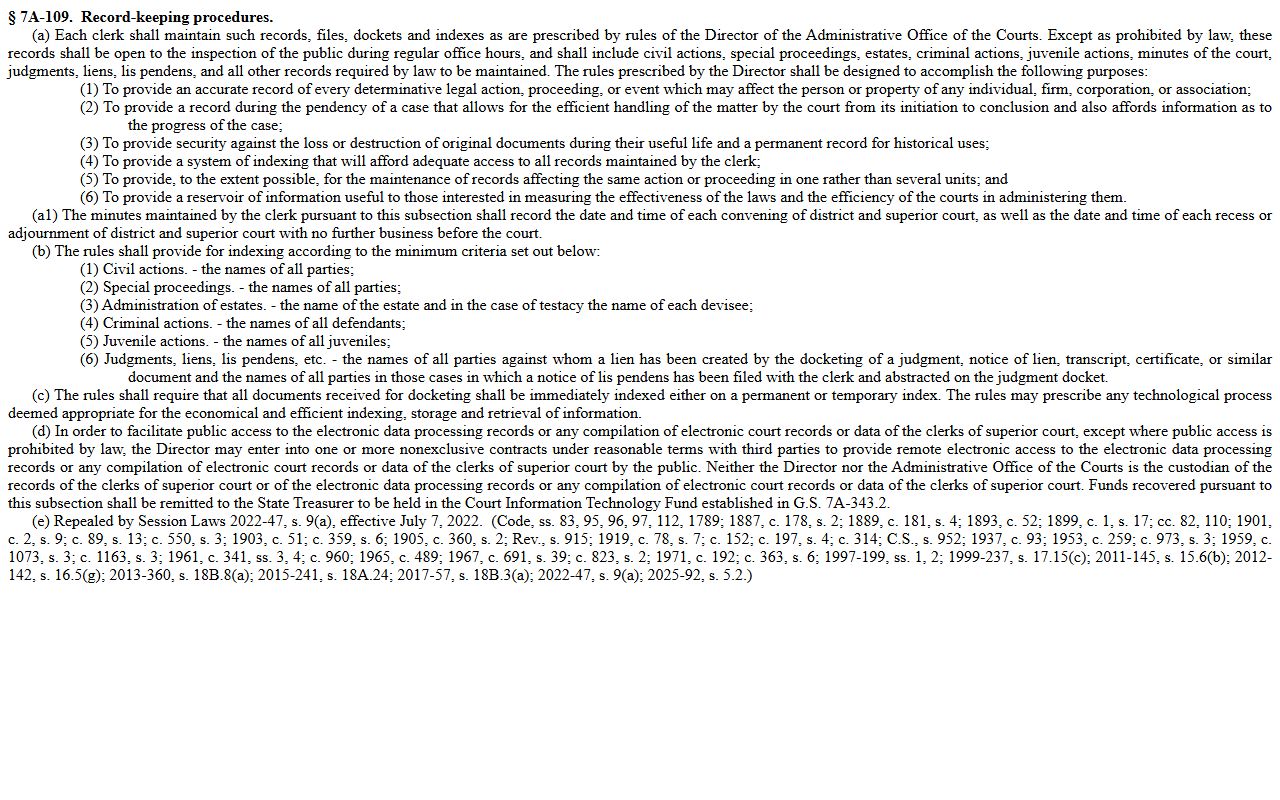
That statute is one reason a clerk-run search is the authoritative source for a single county. Some criminal investigation files are not public, though. Active investigation and intelligence records are held back under a separate statute, even when the court case itself is open.
See the G.S. 132-1.4 statute page for criminal investigation and intelligence records.
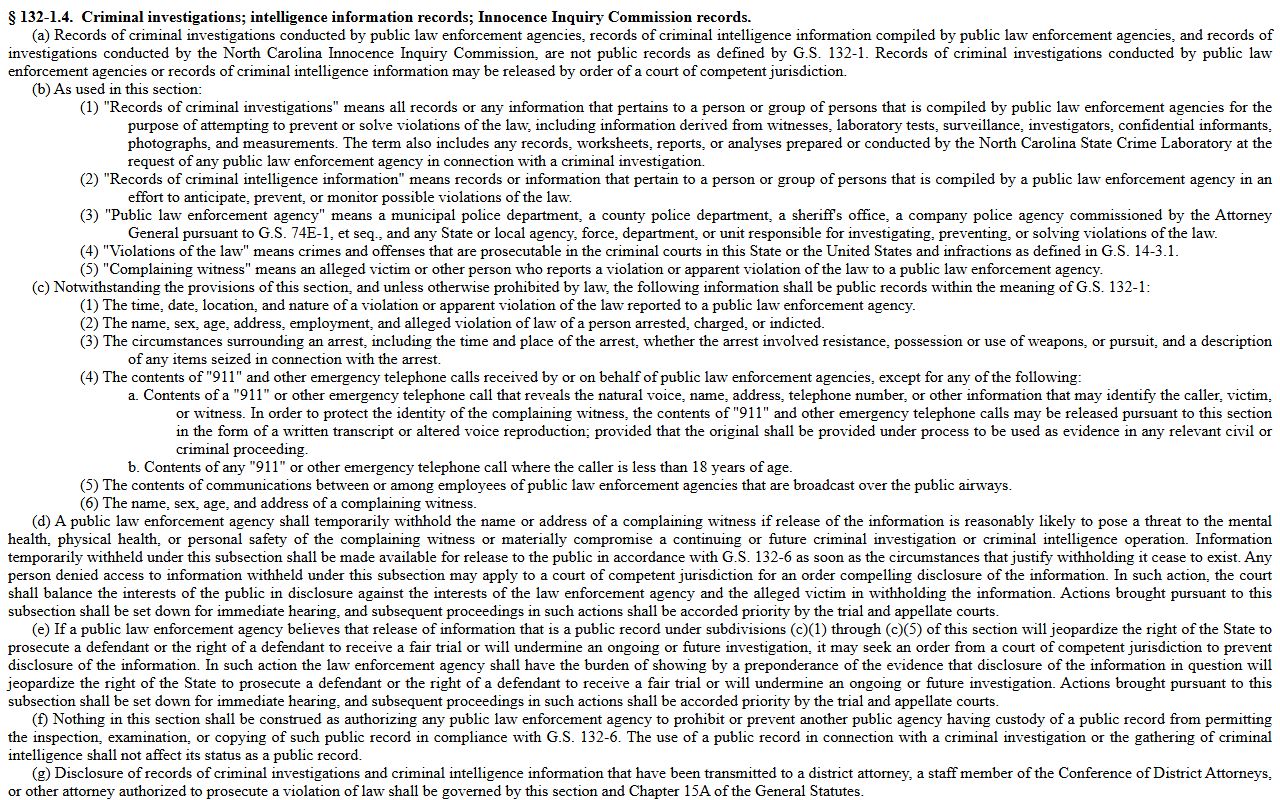
That law explains why a police investigation file can stay closed while the related court case stays open. For arrest details, the arrest records page covers the sheriff's recent-arrest search.
Expunged Records and the Clerk
When a court grants an expunction, the matter drops out of public view. The clerk processes the court paperwork, and the record stops showing up in a normal search. North Carolina has more than one expunction path. Each has its own age, offense, and waiting-period rules. Court staff cannot give legal advice on which path fits your case, so talk to an attorney or use the official forms.
One common path covers certain older misdemeanor convictions. The statute sets out who qualifies and after how long.
The G.S. 15A-145 statute page covers expunction of certain misdemeanor convictions.
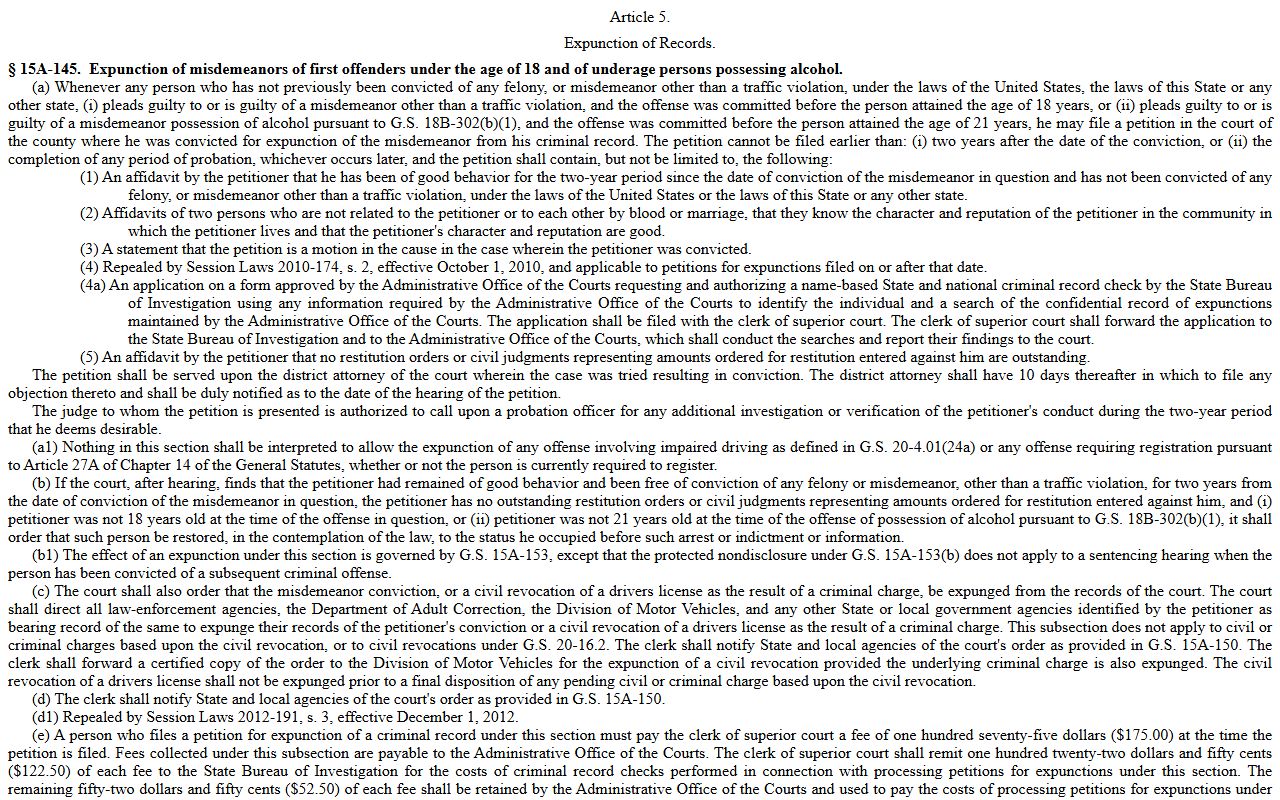
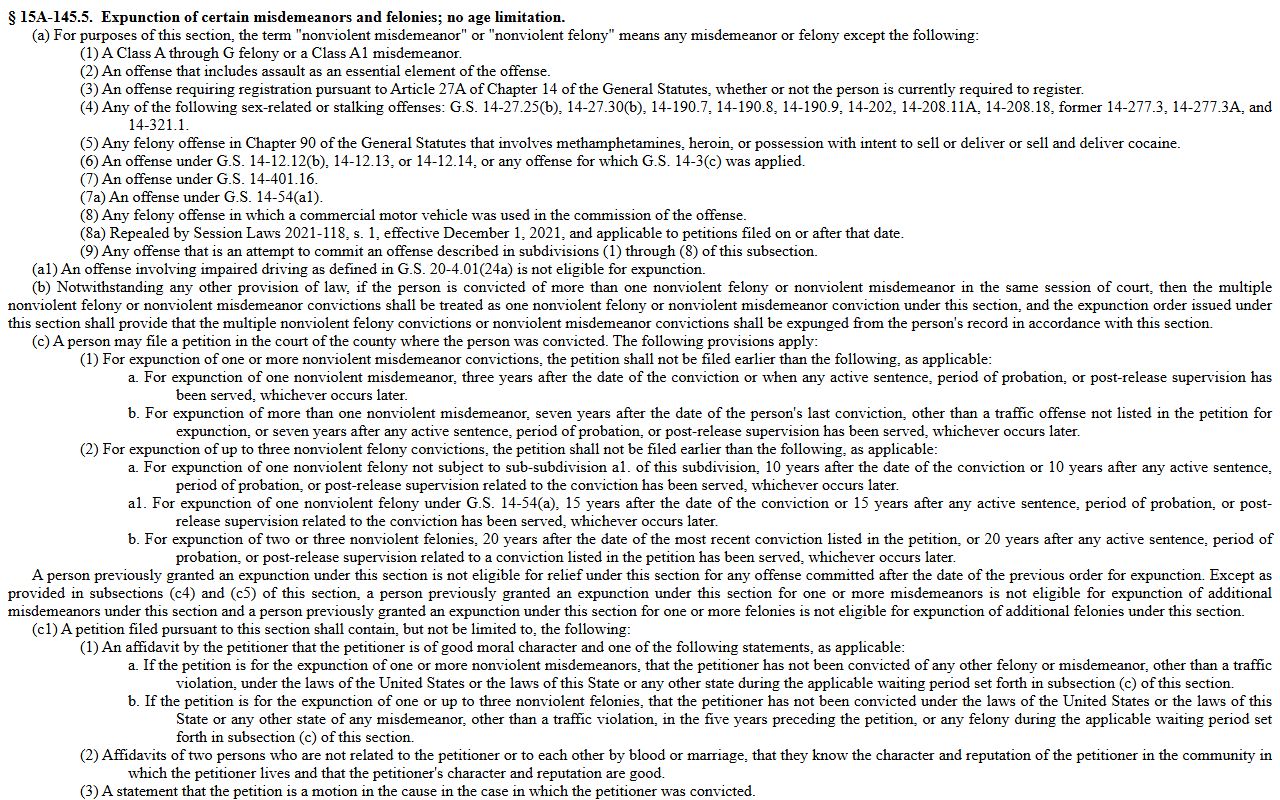
That statute is one of several routes a person can use. The main adult expunction statute reaches certain nonviolent misdemeanors and felonies after set waiting periods and conditions.
Read the G.S. 15A-145.5 statute page for expunction of certain misdemeanors and felonies.
After an expunction, the underlying files are not simply gone. A separate statute governs how agencies hold those files in confidence and who may still see them. That is why expunged matters do not act like normal public records.
The G.S. 15A-151 statute page explains confidential files kept after expunction.
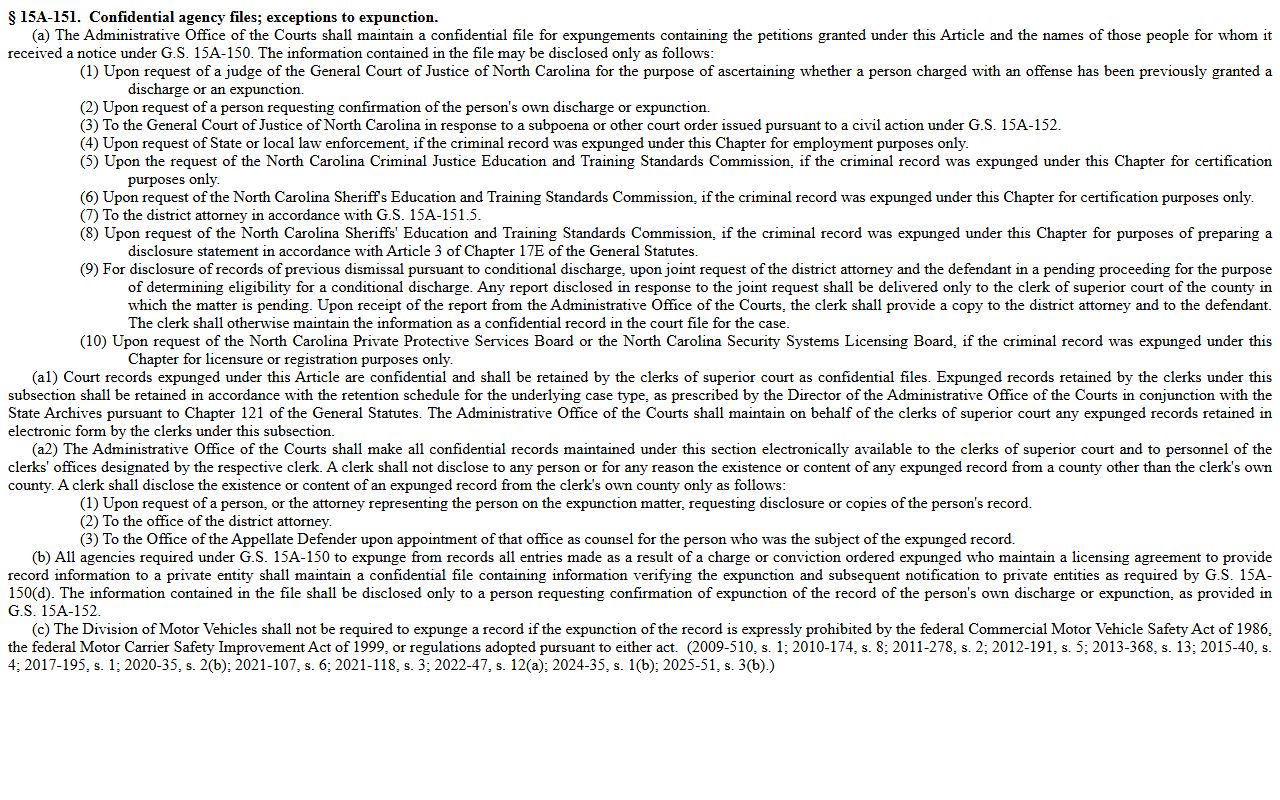
That statute is the reason an expunged case can vanish from a public search yet still exist under seal. Do not assume a missing online case means no case ever existed.
The Clerk as Judge of Probate in Johnston County
Johnston County has no separate probate court. The Clerk of Superior Court serves as judge of probate. That means the clerk admits wills, issues letters to executors and administrators, and supervises how estates are settled. The office also handles guardianships for minors and incapacitated adults, plus trusts in limited contexts. The role is both administrative and judicial.
Estate and special proceeding files can be viewed at public self-service terminals in clerk offices, and the full paper file can be reviewed by visiting the clerk in Johnston County. Staff can make copies for a fee. The portal's Smart Search includes Estates and non-confidential Special Proceedings, so you can often find the case number online first. Older estates and paper documents may still need an in-person visit.
Some probate-related matters carry confidentiality. Adoption records are confidential. Guardianship and incompetency files can hold medical or incapacity details that are protected. For full steps and fees on estates and wills, see the probate records page. The clerk handles court proceedings that touch real estate, such as foreclosures, partitions, and estates, while recorded deeds and plats go to the Register of Deeds.
Clerk of Superior Court vs Register of Deeds
People mix up these two offices all the time. They are not the same, and sending a request to the wrong one wastes time. The Clerk of Superior Court keeps court case files and serves as judge of probate. The Register of Deeds keeps land, marriage, and vital records. Craig Olive serves as the Johnston County Register of Deeds, with an office at 207 E Johnston St, Suite 209, reachable at 919-989-5160.
Use this simple split. Court cases, certified court copies, estates, and criminal record searches go to the clerk. Deeds, plats, marriage licenses, and birth and death records go to the Register of Deeds. The two offices share the same downtown courthouse block but run separate systems.
- Clerk of Superior Court: civil, criminal, family, traffic, estate, and special proceeding court files.
- Clerk of Superior Court: certified court copies and single-county criminal record searches.
- Register of Deeds: deeds, plats, and recorded instruments.
- Register of Deeds: marriage licenses and birth and death records.
For marriage and divorce, the split matters. A divorce judgment is a court record held by the clerk, while a marriage license comes from the Register of Deeds. The marriage and divorce records page walks through both.
When the Clerk or NCAOC Cannot Help
The clerk's office has limits. Court staff cannot give legal advice or fill out forms for you. They can hand you the right form and explain procedure, but they cannot tell you what to file or how a judge might rule. For legal questions, talk to an attorney or use a self-help tool.
The state court office, NCAOC, also has limits. It is not the custodian of local court documents, case information, marriage or birth certificates, or background searches. Its public-record request form is for existing administrative records only. If you send a court-file request to NCAOC, it will point you back to the clerk in the county where the case sits. Some records are simply closed to the public too, including juvenile files, adoption records, mental health records, and sealed or expunged matters.
For broader open-records questions beyond court files, the public records page covers the state framework, and the court records page details the portal search.