
How to Search Johnston County Traffic Court Records
Traffic cases in Johnston County are searched through the North Carolina eCourts Portal at portal-nc.tylertech.cloud/Portal/. The portal supports both citation-number search and party-name search, so you can pull up a ticket whether you have the number or just the driver's name. To find a court date, use the Search Hearings module, which lets you look by case number, party, business, attorney, judicial officer, or courtroom. Set the county or location to Johnston County to keep your results local. You do not need an account to view public traffic case information.
Before you start, get your details together. The citation number gives the cleanest match. A full name works too, but a common name can return many cases. It also helps to know the driver's date of birth and the court date if you have it. Have the paper ticket in front of you so you can read the number and the charge correctly.
- Open the eCourts Portal and choose Smart Search or the Search Hearings module.
- Enter the citation number, or type the driver's party name.
- Set the location to Johnston County and narrow by court date when that field is offered.
- Open the matching case and read the charge, court date, and disposition.
- Pay an eligible citation, plan to contest it, or ask the clerk for a certified copy.
Note: the portal shows public docket data for traffic cases, but it is not the official record, so certified copies still come from the clerk.
Which Courts Handle Traffic Cases in Johnston County
North Carolina runs one statewide court system, so there is no separate city traffic court here. Traffic citations and infractions in Johnston County are handled in District Court. District Court hears misdemeanors, infractions, and most everyday traffic matters. Impaired driving is different. A DWI is a criminal charge, not an ordinary payable infraction, and it follows the criminal track rather than the simple ticket-payment path.
The local clerk's office keeps the files and takes payments. The table below shows where Johnston County traffic matters land and who to contact.
| Court | Traffic Cases Handled | Address |
|---|---|---|
| District Court (District 12) | Citations, infractions, traffic misdemeanors, failure to appear | 207 E Johnston St, Smithfield, NC 27577 |
| Superior Court (District 13) | Appeals of district traffic convictions, related felony driving charges | 207 E Johnston St, Smithfield, NC 27577 |
| Clerk of Superior Court (Cashier's Office) | Citation payments, certified copies, court debt | Johnston County Courthouse, 207 E Johnston St, Smithfield, NC 27577 |
For more on how the trial courts divide work, see the Johnston County District Court page. The court records page walks through the full portal in detail.
Types of Traffic Cases on Record
Traffic records in Johnston County cover a wide range of charges. Some are simple tickets you can pay. Others force a court date. The eCourts Portal holds the public case data for these matters, and the charge and statute appear right in the case summary. Knowing the type of charge helps you tell a payable infraction from one that needs you to show up.
- Moving violations - speeding, running a light, unsafe movement, and similar charges that may carry points and insurance effects.
- Non-moving and equipment - expired registration, equipment defects, and other infractions tied to the vehicle.
- Driving while license revoked - a charge that often requires a court appearance, not a simple payment.
- Commercial and CDL - violations by commercial drivers, which carry stricter federal reporting rules.
- Reckless driving and DWI - serious charges that route through criminal court rather than ordinary ticket payment.
Failure-to-appear events also become part of the record. When a driver misses a court date, the case file shows the FTA, which can bring added court and licensing consequences.
What Johnston County Traffic Court Records Show
A Johnston County traffic court record is built from several fields. The public case summary in the portal can show the citation or case number, the named defendant, the offense and statute, the court date, the disposition, and the fines or costs owed. It also tracks compliance history, including any failure-to-appear event and whether court debt remains. A sample traffic record gives you a clear picture of what happened with a ticket. The table below breaks down the common fields and what each one tells you.
| Field | What It Shows |
|---|---|
| Citation / Case Number | The unique number assigned to the ticket and the court case |
| Defendant | The named driver, plus attorney where one is listed |
| Offense / Statute | The traffic charge and the law section it falls under |
| Court Date | The scheduled hearing date and the courtroom when set |
| Disposition | The outcome, such as paid, dismissed, reduced, or responsible |
| Fines / Costs | Money owed, including fines, court costs, and any unpaid balance |
| Compliance History | Failure-to-appear events and whether court debt remains open |
Social Security numbers should not display in the portal. Some matters tied to criminal charges may show fewer public details. For the full file, contact the clerk in Johnston County.
Searching Johnston County Traffic Records by Citation Number vs by Name
You can search a traffic case two main ways. The citation number is the fastest and cleanest. It points to one specific ticket, so there is no guessing among matches. A name search works when you do not have the ticket, but a common name can return many people and many cases. Filter by Johnston County and add a date of birth or court date when the portal allows it. Watch the citation-number format, since a small typo will return nothing.
The table below lists the search fields the portal offers for traffic lookups.
| Search Field | Type | Required | Notes / Format |
|---|---|---|---|
| Citation Number | Text | Conditional | Best single-match search; enter the number exactly as printed |
| Party Name | Text | No | Search by the defendant driver's name; common names return many results |
| County / Location | Filter | No | Set to Johnston County to keep results local |
| Court Date / Hearing | Hearing module | No | Search by case number, party, business, attorney, judicial officer, or courtroom |
If you find more than one match by name, open each case and check the offense and court date to confirm you have the right driver.
Paying or Contesting a Johnston County Traffic Ticket
How you handle a ticket depends on the charge. Some citations can be paid online if eligible, while others need you to appear in court. Do not assume every ticket can be paid online, since the payment option opens only for eligible citations. Paying may enter a responsible or guilty outcome depending on the offense, so pay only if you do not plan to dispute the charge. Johnston County takes payments by mail, in person, and online when allowed.
Mail payments go to the clerk by money order or certified check, payable to the Johnston County Clerk of Superior Court, PO Box 297, Smithfield NC 27577. No cash and no personal checks by mail, and you must include the citation number. In person, the Cashier's Office in the Johnston County Courthouse at 207 E Johnston St takes cash, credit or debit with processing fees, money orders, and certified checks, but not personal checks. Online payment runs through NC Judicial Branch services if your citation is eligible, with credit or debit plus processing fees.
The county's payment information page spells out the accepted methods and the mailing rules.
- Search the citation or court date in the eCourts Portal to confirm the charge and amount.
- Check whether the citation is waivable or payable, or whether it requires a court appearance.
- To pay by mail, send a money order or certified check with the citation number to the clerk.
- To pay in person, go to the courthouse Cashier's Office with cash, a card, a money order, or a certified check.
- To contest, appear on the scheduled date or talk to an attorney, and do not pay a charge you mean to dispute.
- If you miss a court date, contact the clerk or an attorney right away, since a failure to appear brings added penalties.
Note: the Guide & File tool supports a Request for Dismissal or Speeding Reduction for Traffic Citations, but eligibility is decided by the court and the district attorney.
Public Access Laws for Traffic Court Records
North Carolina treats court records as the property of the people. The public-records law starts in Chapter 132, and it lets any person inspect records and get copies without saying why. Traffic case files held by the local clerk follow the same open-access rule as other court records, except for sealed, juvenile, or restricted matters. The clerk keeps the official files, so case-file requests go to the clerk, not to the state court office.
Key Statutes:
North Carolina G.S. 132-1 - defines public records broadly and states they belong to the people.
North Carolina G.S. 132-6 - gives anyone the right to inspect and copy records and allows online access in view or print form.
For a wider look at how access rules work across all case types, see the Johnston County court records page.
Court Traffic Records vs State Driver Records
This is the part that trips up most people. A Johnston County court traffic record and a North Carolina driver record are two different files held by two different agencies. The court file answers what happened in court. The driver record answers what the licensing agency has on file. A driver may need both, especially when trying to understand why a license is suspended. The court clerk can explain court balances and compliance. The NC DMV controls license status and driver-record copies.
The comparison below lays out how the two records differ.
| Comparison Point | Court Traffic Record | State Driver Record |
|---|---|---|
| Record source | Clerk of Superior Court / District Court | North Carolina DMV |
| What's in it | Citation and case number, charge, court date, disposition, fines and costs, failure-to-appear events, judgment and compliance | License class and status, points, suspensions, reported convictions, CDL status |
| Where to access | eCourts Portal or the Johnston County clerk | NC DMV driver-record services |
| How to correct errors | Contact the clerk in the county where the case sits | Contact the NC DMV that maintains the driver file |
Note: a clear or paid court case does not always mean the driver record shows the same status, since the two files update on their own schedules.
CDL and Commercial Driver Records
Commercial drivers face tougher rules. A CDL holder often cannot resolve a ticket with a simple payment the way an ordinary driver might. Many commercial violations require a court appearance, and federal rules limit the options a CDL driver has to keep a charge off the record. Traffic convictions for CDL holders are reported and can affect the license and a driver's job. A CDL case in Johnston County shows up in the same eCourts Portal search, but the stakes are higher.
If you hold a CDL and get a citation, read the charge and court date carefully, and consider talking to an attorney before you pay. Paying may lock in a conviction that hits your commercial driving record.
DUI / DWI Cases
Impaired driving is criminal, not an ordinary payable infraction. A DWI in Johnston County routes through criminal court, not the simple ticket-payment path. The county has also been part of a state push to move these cases faster. In 2025 North Carolina Courts received a $147,000 Governor's Highway Safety Program grant to expedite DWI cases in Johnston, Mecklenburg, and Wake counties. Jason T. Waller serves as District Attorney for Prosecutorial District 13, which prosecutes these matters.
The Judicial Branch announced Mr. Waller's appointment in its news section.
The Judicial Branch news naming Jason T. Waller as District Attorney covers the appointment for Prosecutorial District 13.
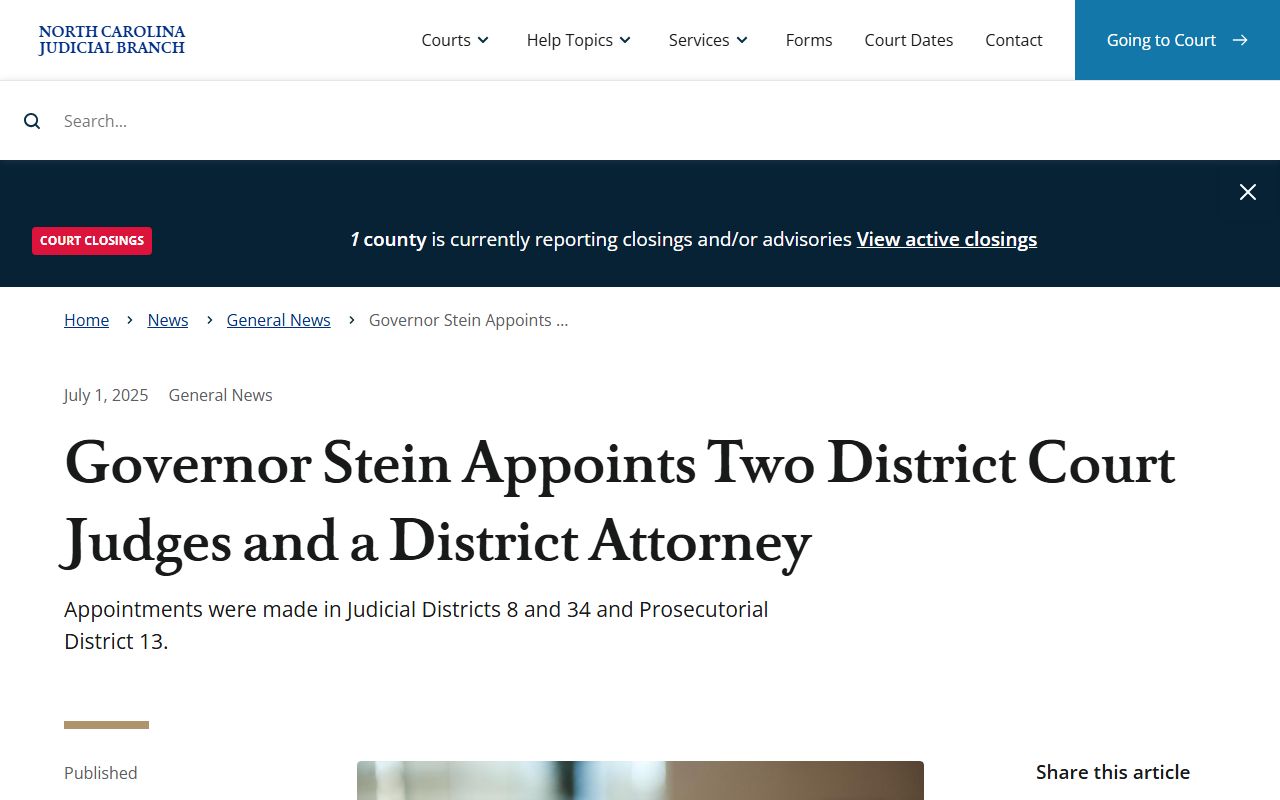
That office decides how impaired-driving and serious traffic charges are handled in court. For full Johnston County DUI/DWI case information, see Johnston County criminal records.
Deferred Adjudication and Defensive Driving Course
North Carolina does not run a one-size deferral or defensive-driving program for every ticket. Some drivers ask the court to dismiss or reduce a charge instead. The Guide & File system lists a Request for Dismissal or Speeding Reduction for Traffic Citations as a supported case type, which lets eligible drivers prepare the paperwork online. Eligibility is not automatic. The court and the district attorney decide whether a charge can be reduced or dropped, so do not count on a reduction until it is granted.
A reduced charge can lower points and the insurance hit, but it is not promised. If you want to pursue a reduction, file the right request early and be ready to appear. An attorney or legal aid can help you understand what your specific charge allows.
Sealing or Expunging Johnston County Traffic Records
Expunction in North Carolina is statute-driven, and traffic matters fall under the same general rules as other records. Ordinary infractions paid as a responsible outcome usually are not erased, but certain dismissed or eligible charges may qualify for expunction. The process means filing the correct AOC form in the county court, meeting offense and timing rules, and sometimes a district attorney review. If granted, the matter is removed from ordinary public access.
Do not assume a ticket can be wiped from the record. The clerk processes the petition, and a judge decides it. For criminal-side charges like DWI, the rules are stricter. Talk to an attorney or legal aid about whether your record qualifies before you file.
Federal Traffic and Court Matters
Not every traffic charge is a state case. A traffic or criminal offense committed on federal property, such as a military installation or a federal building, is handled in federal court rather than the Johnston County clerk's office. Those matters go to the U.S. District Court for the Eastern District of North Carolina, which covers this part of the state. Federal records are not kept by the county clerk and are accessed through a separate federal system.
The federal trial court for this region maintains its own dockets and calendars.
The U.S. District Court for the Eastern District of North Carolina handles federal cases that arise in Johnston County.
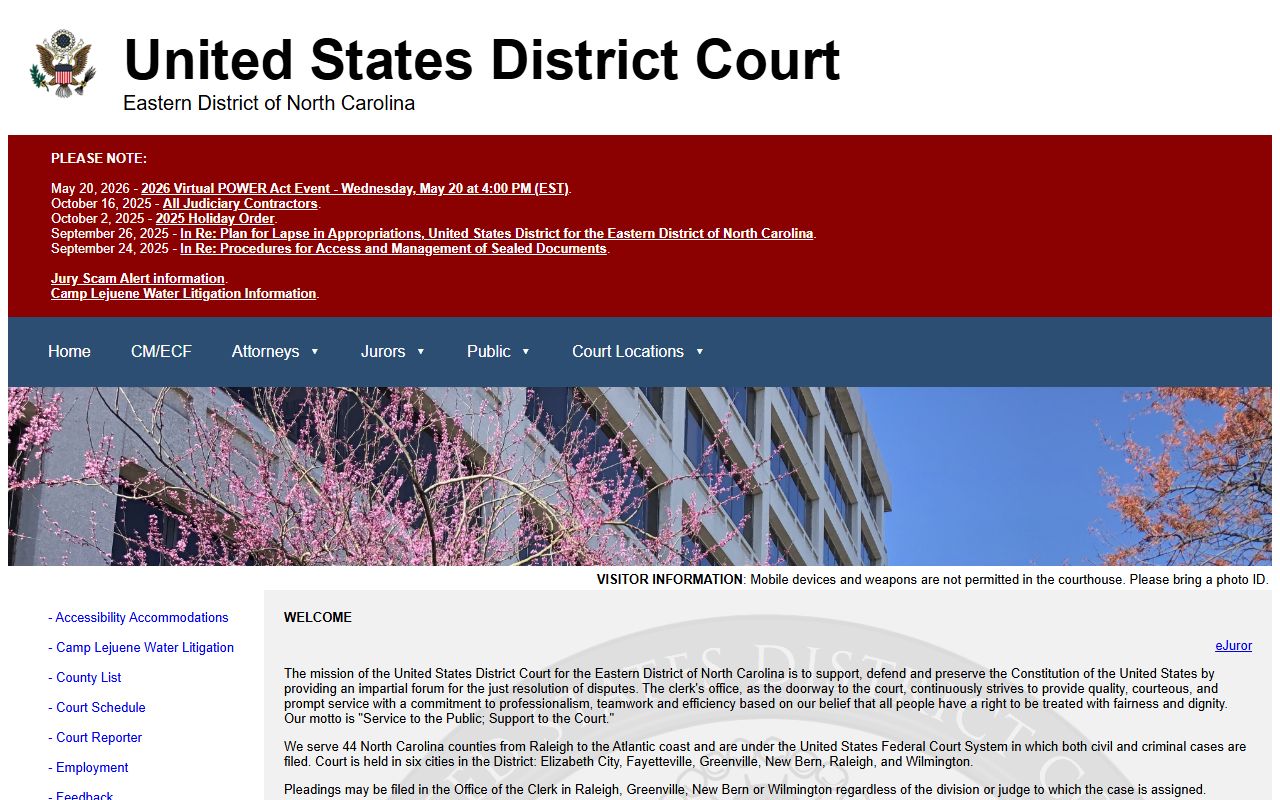
That court is where a federal traffic or criminal charge in this area would be filed. To read the actual federal case files, you use the national records system.
Federal court records, including dockets and filings, come through the public records system rather than a local clerk.
PACER provides federal court records and lists the fees that apply to searches and document downloads.
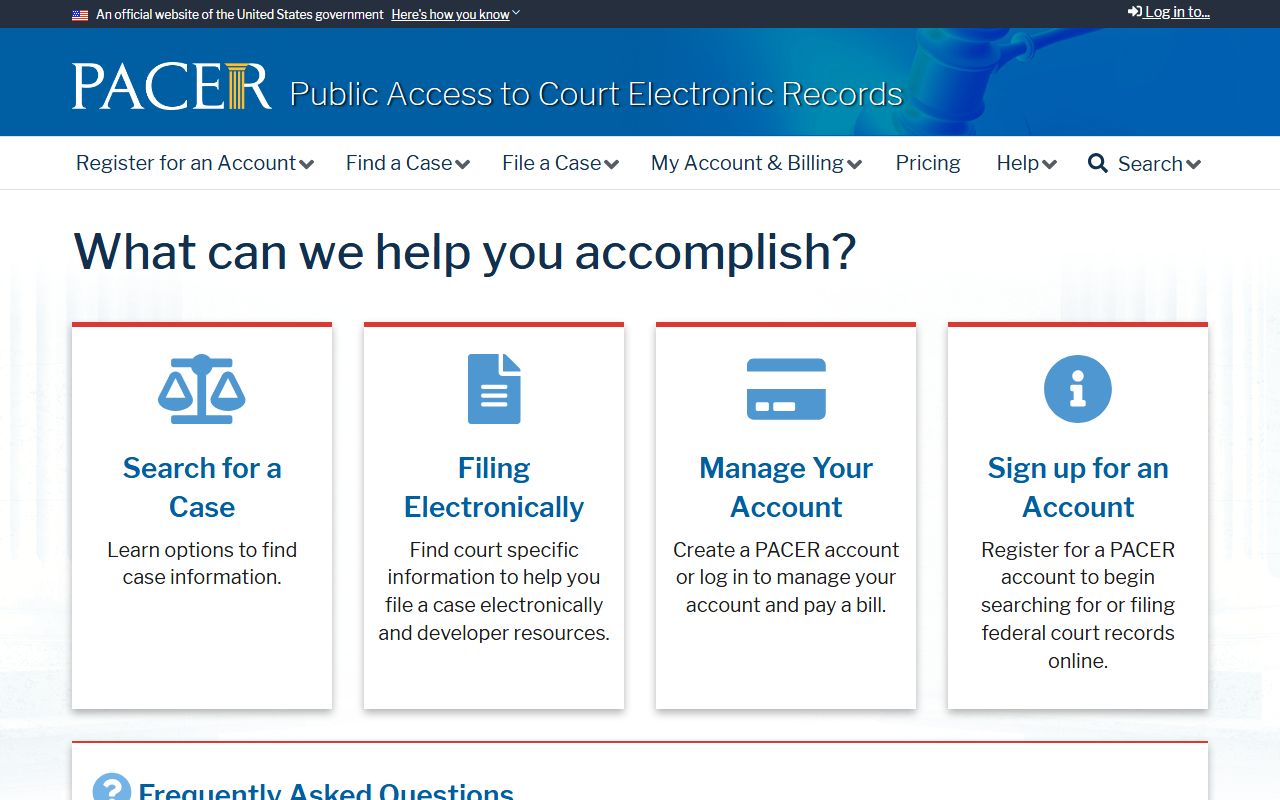
PACER requires registration and charges fees under federal policy, with some waivers available. If a federal traffic or criminal case is appealed, it moves up to the circuit court.
Appeals from the Eastern District of North Carolina go to a regional federal appeals court.
The U.S. Court of Appeals for the Fourth Circuit hears appeals from federal cases that begin in this district.
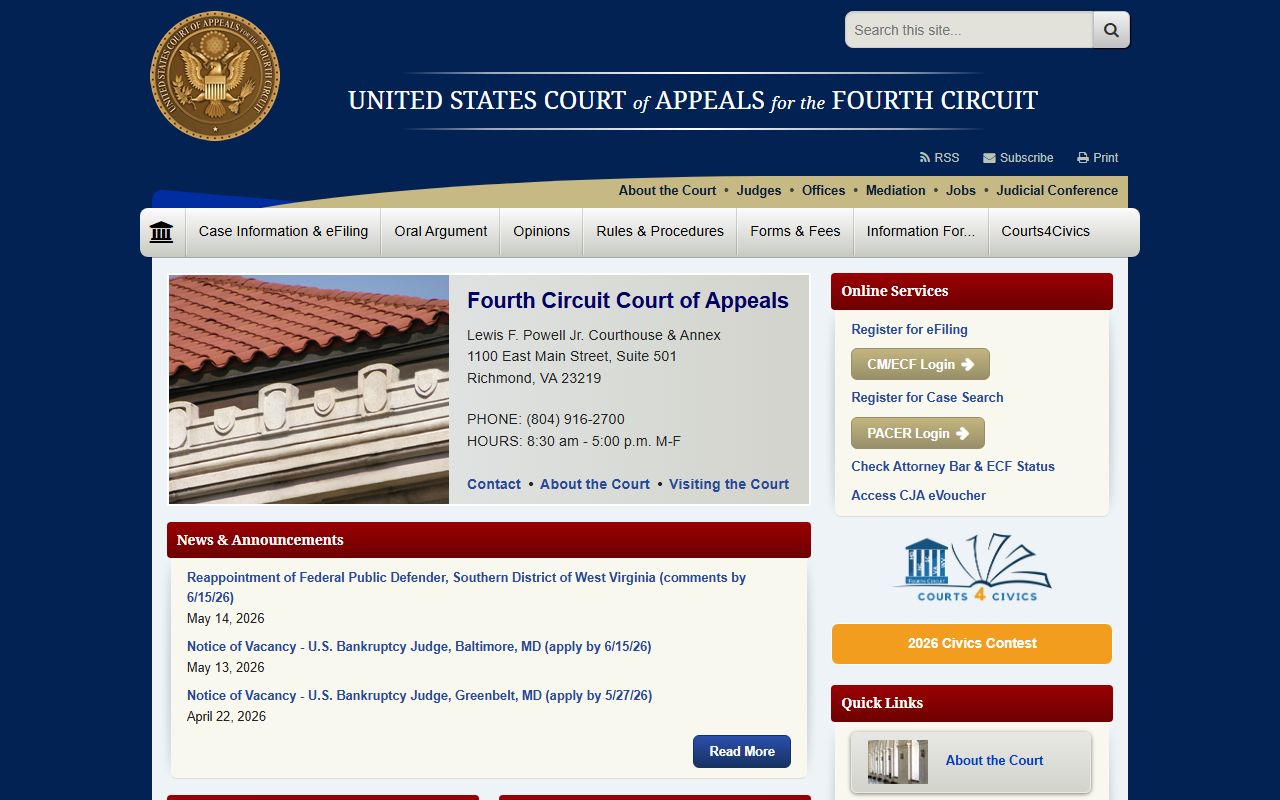
That court reviews federal trial-court rulings. Federal money matters that are not traffic-related, such as bankruptcy, have their own court as well.
Federal bankruptcy filings for this region run through a separate federal court.
The U.S. Bankruptcy Court for the Eastern District of North Carolina handles federal bankruptcy cases for the area, separate from any Johnston County traffic court records.
It is listed here because federal court access works the same way across these courts: through PACER, not the county clerk.
Fees for Traffic Record Copies
What you pay depends on what you ask for and which office holds it. Viewing a traffic case on the eCourts Portal is free. A certified copy or a formal search carries a charge. The clerk handles certified court copies. The state court office charges a flat per-page rate for copies under its published policy. A North Carolina driver record is a separate DMV product with its own fee. The table below lists common costs from official sources.
| Item | Amount |
|---|---|
| Record inspection on the portal | No charge |
| Court office copy, per page | $0.25 |
| Certified single-county criminal record search (Form AOC-CR-314) | $25.00 |
| Driver record (NC DMV) | Set by the NC DMV |
Online and in-person card payments add processing fees. For more on clerk services and certified copies, see the Johnston County Clerk of Superior Court page or the FAQ.