
Johnston County District Court Overview
North Carolina runs one unified court system, the General Court of Justice. There are no separate city or county trial courts. The trial level splits into two divisions: the Superior Court and the District Court. Both meet at the Johnston County Courthouse in downtown Smithfield. The District Court is the high-volume court. It handles misdemeanors, infractions, civil suits between $10,000 and $25,000, divorce and custody, juvenile cases, and most traffic matters. The Superior Court is the higher trial court for felonies, civil disputes over $25,000, and appeals of misdemeanors and infractions from District Court.
Johnston County carries three district labels. It sits in Prosecutorial District 13, Superior Court District 13, and District Court District 12. Those numbers route the local prosecutor, the Superior Court judges, and the District Court judges who serve the county. To look up cases and hearing dates, start with the state portal and then turn to the local clerk for paper files. For a full walkthrough of the portal, see the court records page.
Johnston County District Court Offices and Phones
Because North Carolina is a unified system, the District Court is not a list of numbered courtrooms the way some states run them. Instead, one set of offices at the Johnston County Courthouse staffs the civil, family, and criminal sides of both trial divisions. The county courthouse directions, parking, and accessibility page is a good first stop before any visit.
The county's courthouse directions and parking page shows the visitor entrance and the accessible ramp.
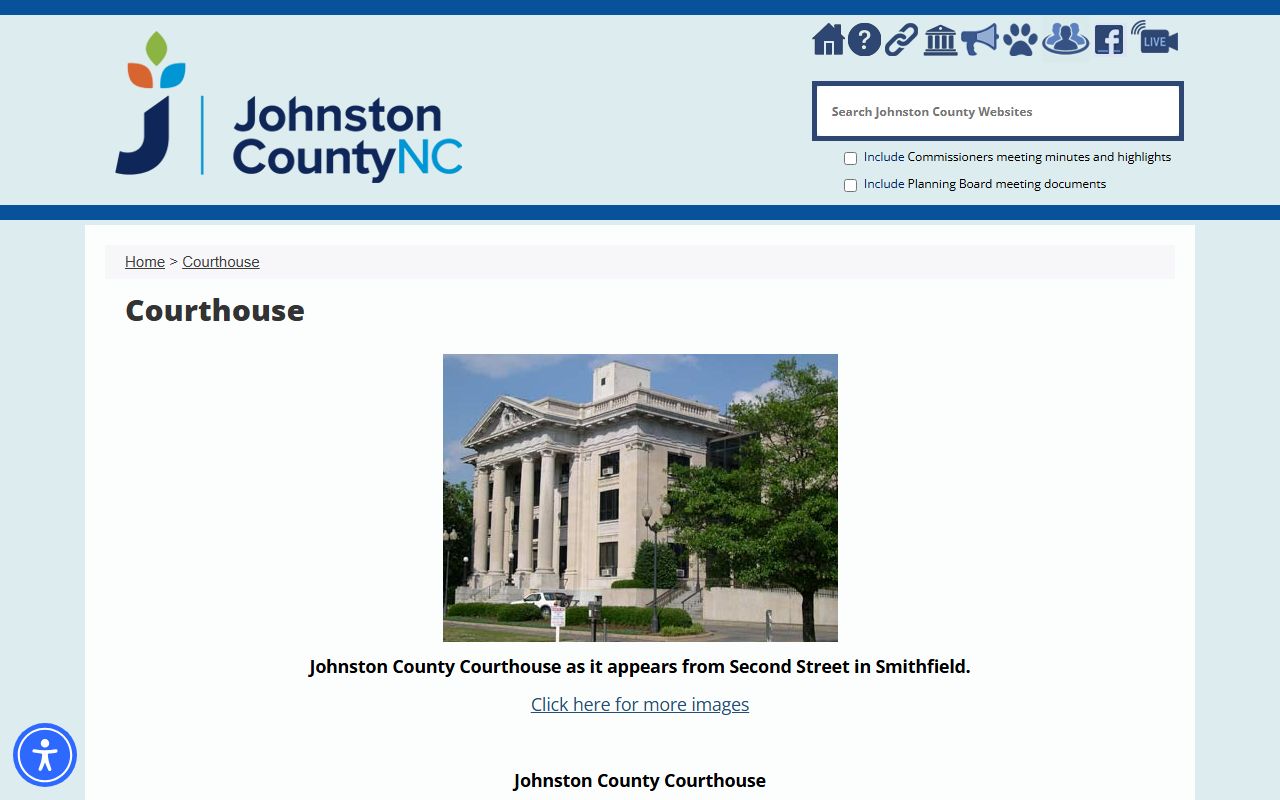
That page lists the visitor entrance at Second and Market Streets, with the accessible ramp on Second Street. The table below lists the courts and offices you may need, with their phones, all housed at the Johnston County Courthouse.
| Court / Office | Address | Phone | Notes |
|---|---|---|---|
| Clerk of Superior Court | Johnston County Courthouse, 207 E Johnston St (PO Box 297), Smithfield, NC 27577 | (919) 209-5400 | Civil, criminal, domestic, estates, special proceedings |
| Superior Court Judges | Johnston County Courthouse | (919) 209-5510 | Superior Court District 13 |
| District Court Judges | Johnston County Courthouse | (919) 209-5452 | District Court District 12 |
| District Attorney | Johnston County Courthouse | (919) 209-5520 | Prosecutorial District 13 |
| Magistrates - Civil | Johnston County Courthouse | (919) 209-5460 | Small claims, summary ejectment |
| Magistrates - Criminal | Johnston County Courthouse | (919) 209-5462 | Initial appearances, conditions of release, warrants |
| Guardian ad Litem | Johnston County Courthouse | (919) 934-3348 | Juvenile abuse, neglect, dependency cases |
Call the right line for your matter. The main courthouse number connects you to the clerk, who keeps the files for both trial divisions.
Superior Court vs District Court vs Magistrate Court
The three trial-level options in Johnston County split the work by case size and case type. The District Court takes the bulk of day-to-day matters. The Superior Court takes the serious crimes and the big-dollar civil suits. Magistrates, who are officers of the District Court, handle the smallest claims and the first steps in criminal cases. The table below lays out the key splits, including dollar thresholds and where appeals go.
| Superior Court | District Court | Magistrate Court | |
|---|---|---|---|
| Civil Limit | Over $25,000 | $10,000 to $25,000 | Small claims under $10,000 |
| Criminal Jurisdiction | Felonies | Misdemeanors and infractions | Initial appearances, set bond, issue warrants |
| Family Cases | No | Yes (divorce, custody, support) | No |
| Appeals Go To | Court of Appeals | Superior Court (criminal, de novo) | District Court |
Magistrates also enter summary ejectment orders, determine some involuntary commitments, and perform marriages. A small claims judgment from a magistrate can be appealed to the District Court for a fresh hearing. Misdemeanor convictions in District Court can be appealed to Superior Court, where a jury hears the case again. For hearing calendars across all three, see the court dockets page.
How a Case Moves Through the Johnston County District Court
A case climbs the system one level at a time. Most start at the bottom with a magistrate or in District Court, then move up only if someone appeals or if the charge is serious enough to begin in Superior Court. The flow lines below trace the path for the common tracks. North Carolina is unusual in that criminal appeals from District Court are heard fresh, or de novo, in Superior Court rather than reviewed on the record.
Overall court ladder: Magistrate / District Court › Superior Court › Court of Appeals › Supreme Court of North Carolina
Criminal flow: Arrest › Magistrate / First Appearance › District Court (misdemeanor) or Indictment to Superior Court (felony) › Trial › Sentencing › Appeal
Civil flow: Complaint Filed › Answer › Discovery › Mediation › Trial › Judgment › Appeal
Here is the criminal path in plain steps:
- Police make an arrest or a magistrate issues a warrant.
- The defendant has a first appearance, where a magistrate sets conditions of release.
- Misdemeanors stay in District Court; felonies go to a grand jury for indictment, then to Superior Court.
- The case moves through pretrial steps to trial.
- A guilty result leads to sentencing, and either side may appeal.
Note: a District Court misdemeanor appeal goes to Superior Court for a brand-new trial, so the result there replaces the District Court outcome.
Civil, Family, and Criminal Divisions in Johnston County District Court
The District Court works across three broad areas. The civil side hears money disputes in the $10,000 to $25,000 range, plus evictions and many landlord-tenant matters that start with a magistrate. The family side, sometimes called domestic court, handles divorce, child custody, child support, alimony, and domestic violence protective orders. The criminal side handles misdemeanors and infractions, from simple assault to many first-time charges.
District Court judges preside over these matters without a jury in most cases. The Johnston County District Attorney, Jason T. Waller, prosecutes criminal cases for Prosecutorial District 13. He was appointed July 1, 2025. People who cannot afford a lawyer for qualifying charges may be served by the Public Defender, A. Traynham Dorn, who has led the Defender District 13 office since July 1, 2024. The county elected-officials list names the local officeholders tied to court records.
The county's elected officials list names the Clerk, Register of Deeds, and Sheriff.
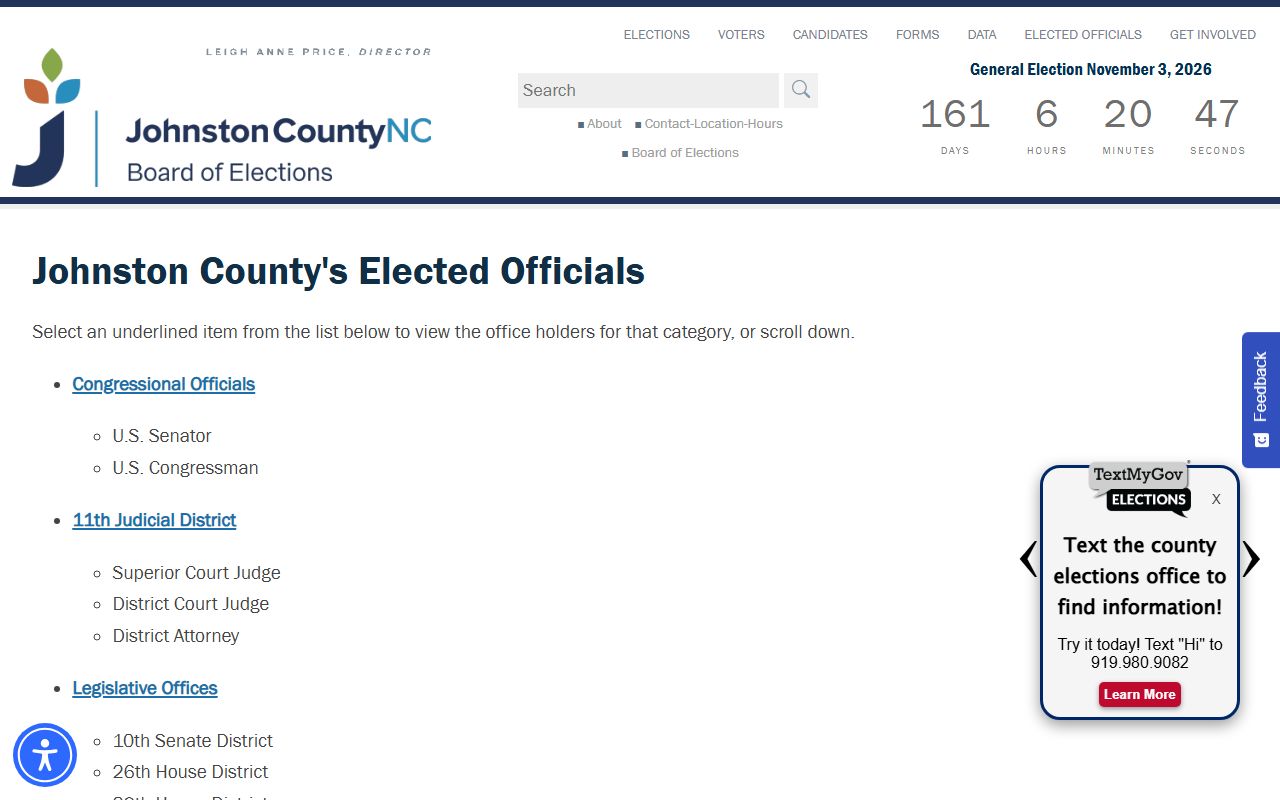
That list shows Clerk Michelle Ball, Register of Deeds Craig Olive, and Sheriff Steve Bizzell. The clerk keeps the court files; the Register of Deeds keeps land, marriage, and vital records.
Johnston County Judicial Districts
Johnston County does not share one number across the courts. The county is Superior Court District 13 and District Court District 12, and prosecution runs through Prosecutorial District 13. Superior Court judges rotate among the districts in their division every six months, a rule meant to keep any one judge from holding too much sway in a single county. The Superior Court traces back to 1777.
District Court District 12 covers Harnett, Johnston, and Lee counties. District Court Judge Brad Salmon was appointed to that district in 2024. The District 13 prosecutor's office files and tries the state's criminal cases for the county. For the full appellate picture, the state's higher courts sit above both trial divisions, with the Court of Appeals as the intermediate court and the Supreme Court of North Carolina at the top.
Magistrates and Lower Courts in Johnston County
Magistrates are judicial officers of the District Court, not a separate court system. In Johnston County they do a lot of the front-line work. On the criminal side, magistrates conduct initial appearances, set conditions of release and bond, and issue arrest and search warrants. On the civil side, they hear small claims under $10,000, enter summary ejectment orders in eviction cases, and can perform marriages. Two phone lines split the work: civil magistrates at (919) 209-5460 and criminal magistrates at (919) 209-5462.
A small claims case is the lowest civil rung. A party who loses before a magistrate can appeal to District Court for a new hearing. There are no city courts or county-only courts beneath the state system, so even local ordinance matters that get prosecuted as offenses move through the District Court. Most traffic citations also start in District Court; see the traffic court records page for how those are paid or contested.
Specialty Court Initiatives Serving Johnston County
North Carolina renamed its Drug Treatment Courts as Recovery Courts as the model grew to cover veterans, mental health, DWI, family, and adult tracks. These are intensive, judge-supervised programs for people in the court system who face substance use or mental health issues. The goal is to cut repeat offenses and help participants stay law-abiding.
Johnston County is served by the District 11A Veterans Treatment Court, which also covers Harnett and Lee counties. It helps veterans whose court involvement ties back to trauma, mental health, or substance use, and connects them to benefits earned through military service. The county is also part of a targeted DWI effort. In 2025 the state announced a $147,000 Governor's Highway Safety Program grant to speed up DWI cases in Johnston, Mecklenburg, and Wake counties. That grant is not a full specialty court, but it shapes how impaired-driving cases move through the local courts. DWI matters route to the criminal side; the arrest records page covers how those charges appear.
Confidential District Court Records in Johnston County
Not every District Court file is open. North Carolina law walls off several categories that the public cannot freely view. Juvenile court files, adoption records, and mental health and involuntary commitment records are the big three. Each rests on its own statute. These limits matter most in District Court because that division hears juvenile and many domestic matters.
Juvenile records are confidential under G.S. 7B-3000, which controls who may see a juvenile court file.
The statute on G.S. 7B-3000 juvenile record confidentiality sets the rule for juvenile files.
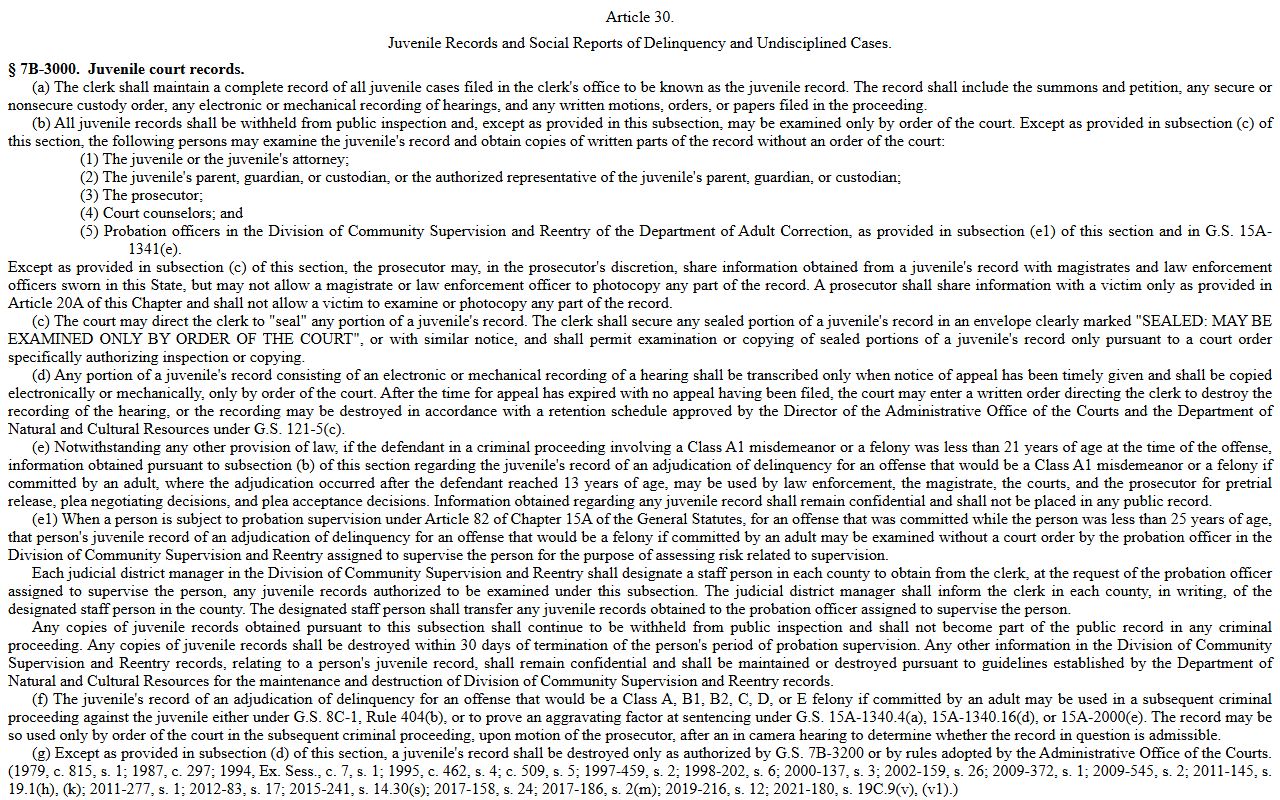
That section keeps most juvenile court files out of public view. Adoption files are sealed under a separate statute.
The statute on G.S. 48-9-102 confidentiality of adoption records closes adoption files to the public.
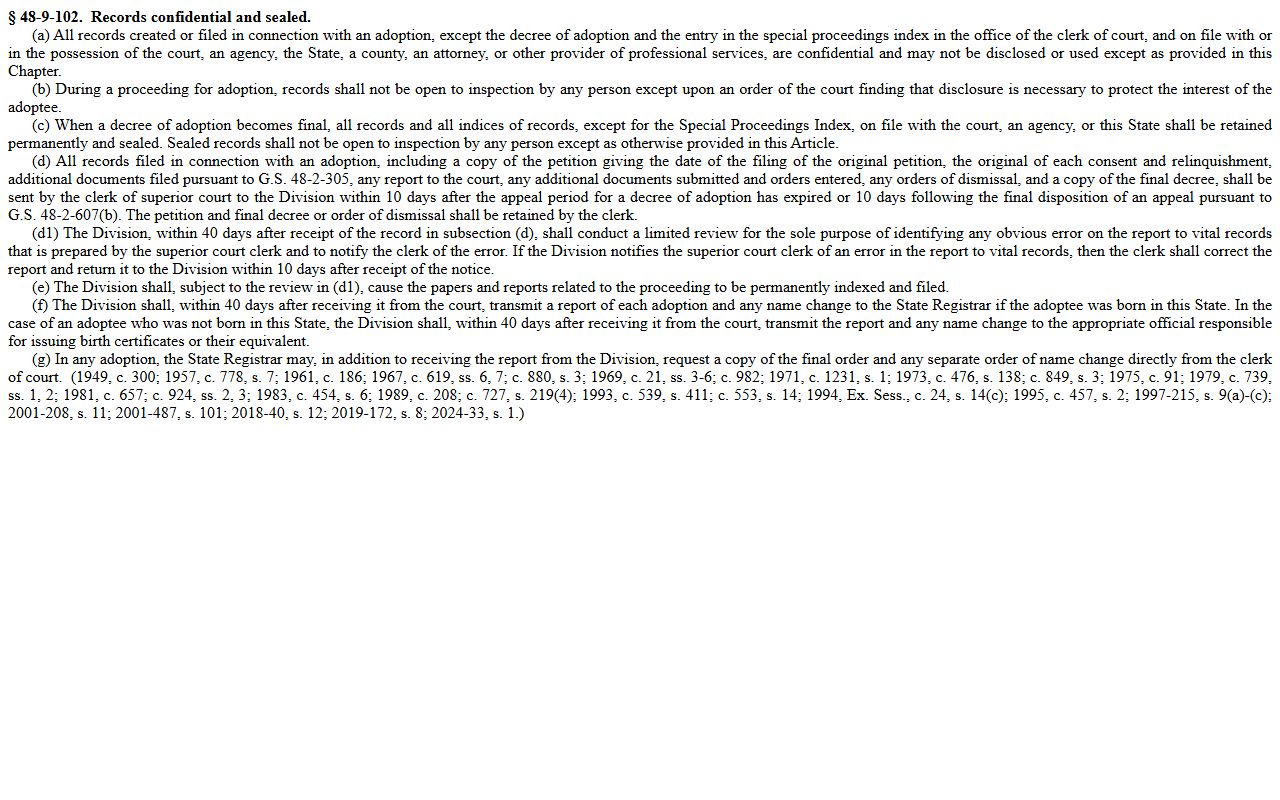
Adoption matters in District Court and the clerk's special proceedings stay confidential under that section. Mental health files carry their own shield.
The statute on G.S. 122C-54 confidentiality of mental health records protects commitment and treatment files.
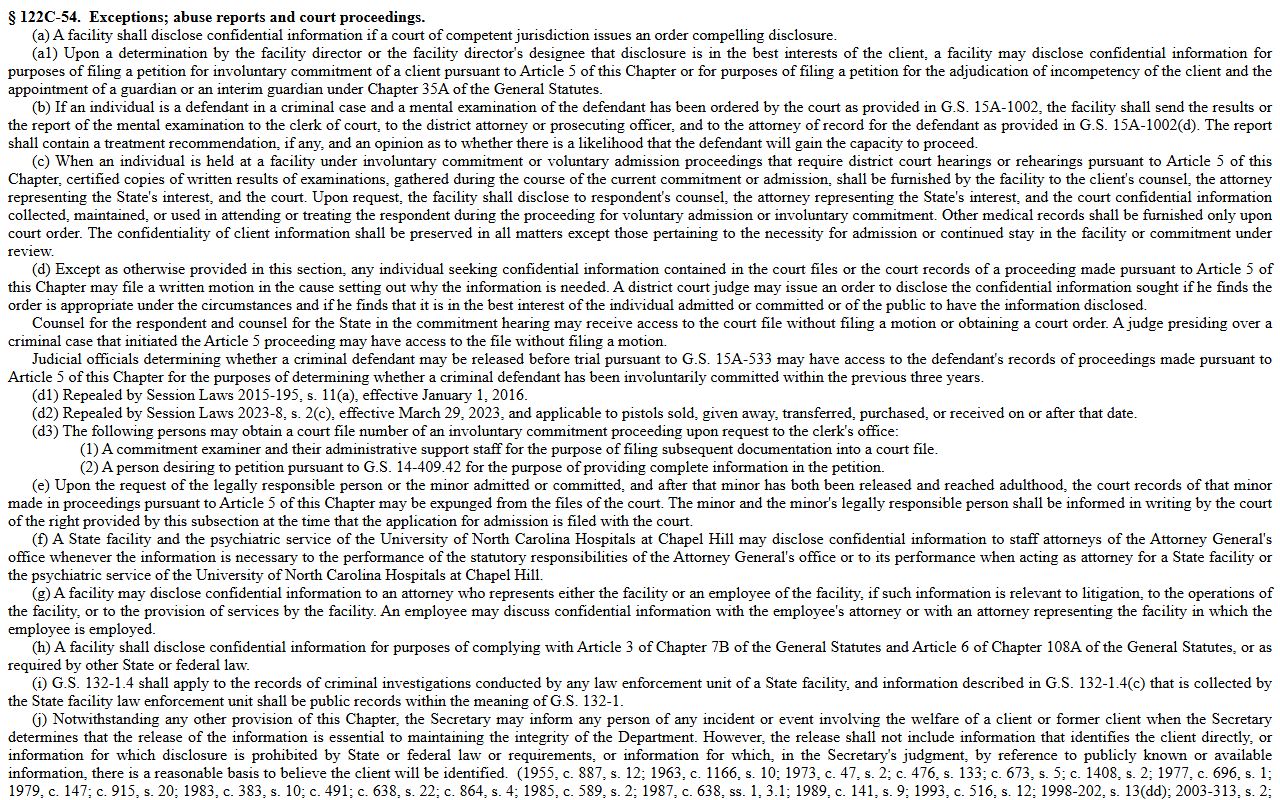
That section guards involuntary commitment and mental health treatment records that pass through the District Court. To view a sealed or confidential file, a person usually must show legal standing and ask the court.
Johnston County Courthouse Hours and Federal Courts
The Johnston County Courthouse stands at 207 E Johnston St in Smithfield, the county seat. The main phone is (919) 209-5400, and the offices run Monday through Friday from 8:00 AM to 5:00 PM. The visitor entrance is at Second and Market Streets, with an accessible ramp on Second Street. The county posts hours for its offices and notes Smithfield as the seat of government.
The county's office hours page lists hours and names Smithfield as the county seat.
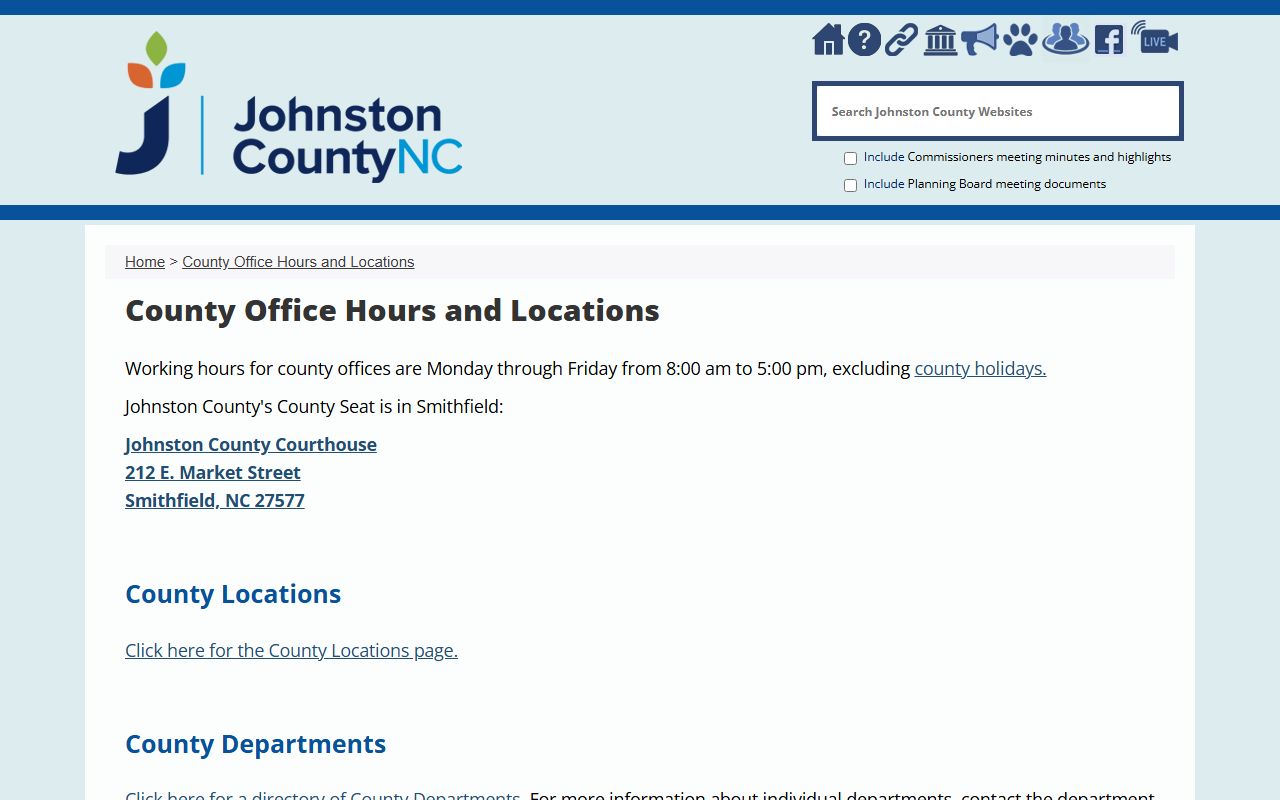
That page confirms the standard weekday hours used by county offices. Federal cases from Johnston County are not heard in District Court at all. They go to the U.S. District Court for the Eastern District of North Carolina, and appeals from there move to the U.S. Court of Appeals for the Fourth Circuit. Those federal files are kept in the federal system, not by the local clerk.